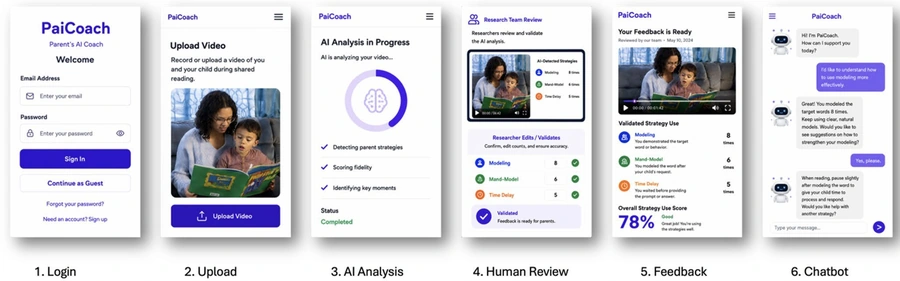
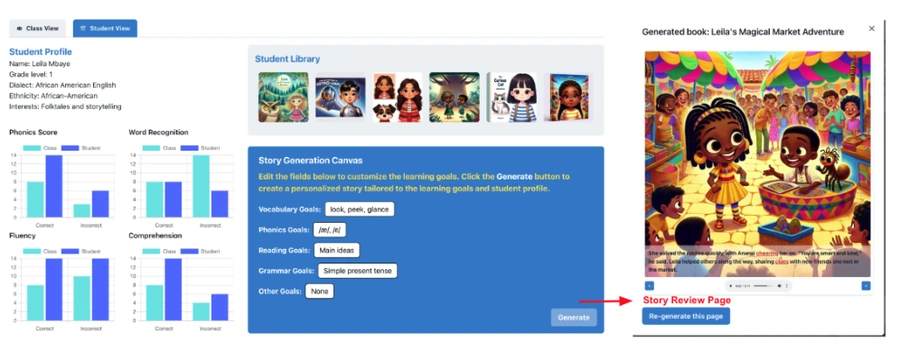
PaiCoach combines AI-generated feedback with human review to support parent-led communication interventions. A four-family single-case study found improvements in parent implementation and child responsiveness, while showing the continued need for expert oversight.
Yusuf Akemoğlu, Zhaohui Li, Qingxiao Zheng, Emily Brooke Roberts, Samar Pratap Singh, and Jinjun Xiong
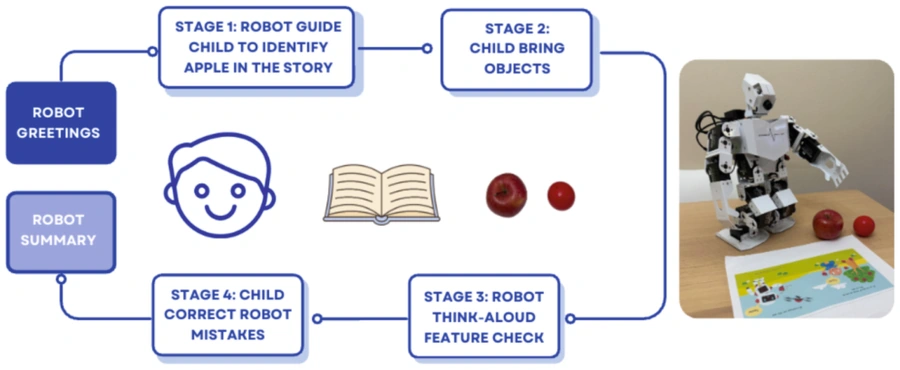
An LLM-powered humanoid robot combines speech, vision, and gesture during shared reading about AI. Comparing three dialogue policies on real hardware identifies how structured interaction and bounded language-model support can improve pedagogical coherence.
Feiwen Xiao, Zhaohui Li, Shiyan Jiang, and Jinjun Xiong
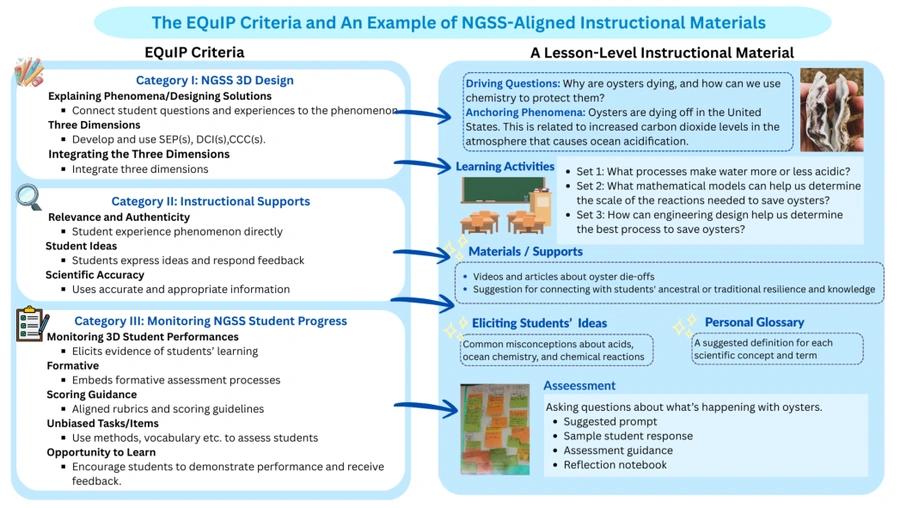
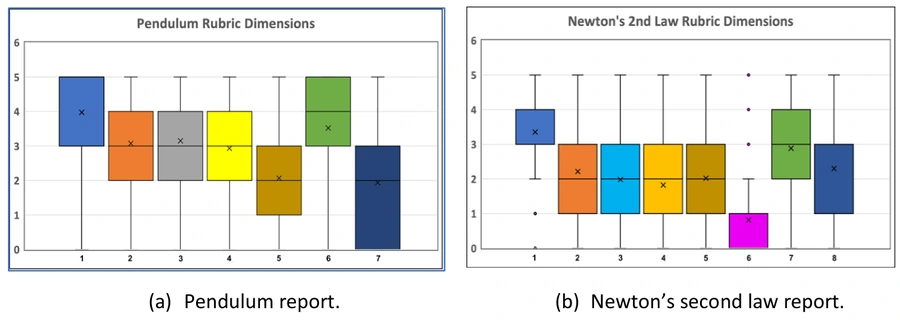
SciEval benchmarks how well language models evaluate K-12 science instructional materials against an educator-designed rubric. It contains 273 lessons annotated across 13 criteria, with scores and supporting rationales, and tests whether domain-specific fine-tuning improves evaluation.
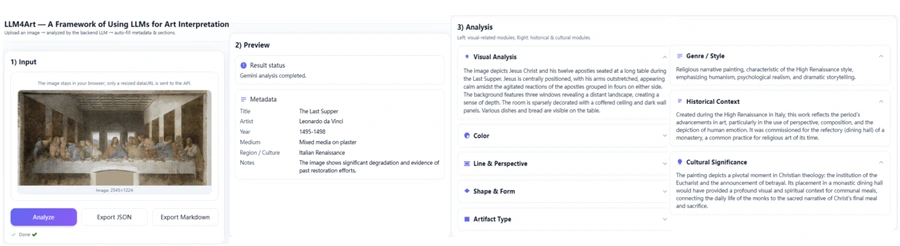
LLM4Art uses expert-informed prompts and rubrics to examine visual analysis, historical context, and cultural significance. A 50-artwork benchmark compares five language models, and a web application makes the interpretation workflow available to users.
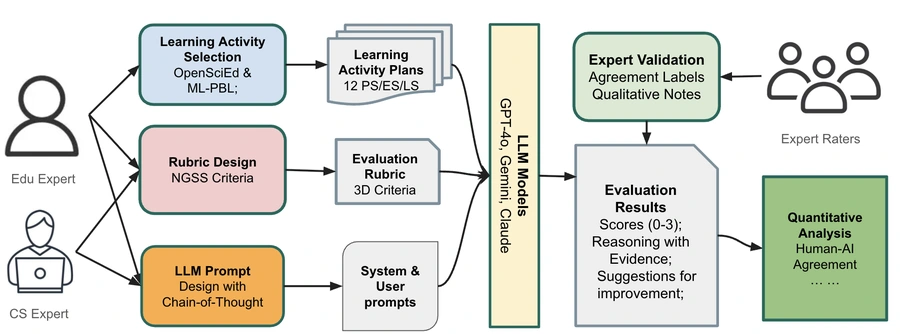
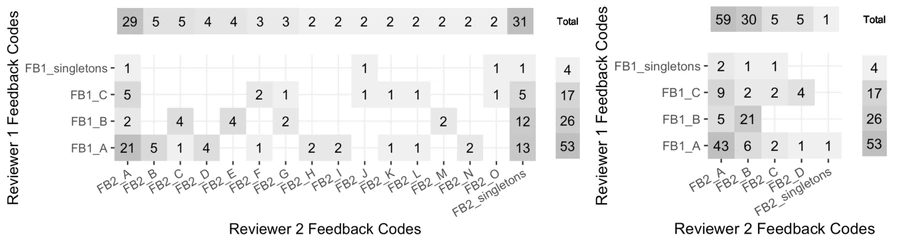
Two science education experts review evaluations from GPT, Claude, and Gemini across 12 curriculum units. The study distinguishes agreement on numerical scores from agreement on reasoning and suggestions, revealing where model judgments depart from educational expertise.
Peng He, Zhaohui Li, Zeyuan Wang, Jinjun Xiong, and Tingting Li
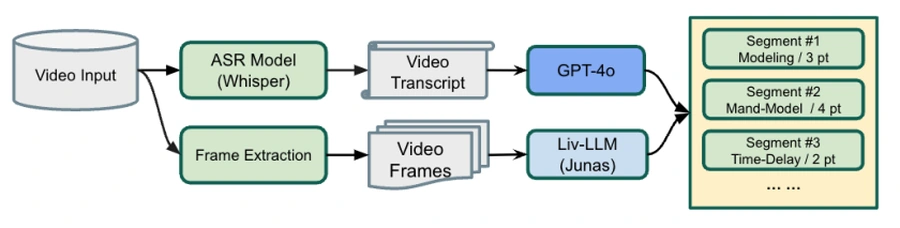
ASD-HI provides a multimodal benchmark for detecting parents' communication strategies and assessing implementation fidelity during home interventions. A baseline pipeline combines speech recognition, video analysis, and language-model prompting to support automated assessment.
Zhaohui Li, Yusuf Akemoglu, Jincheng Lyu, Qingxiao Zheng, and Jinjun Xiong
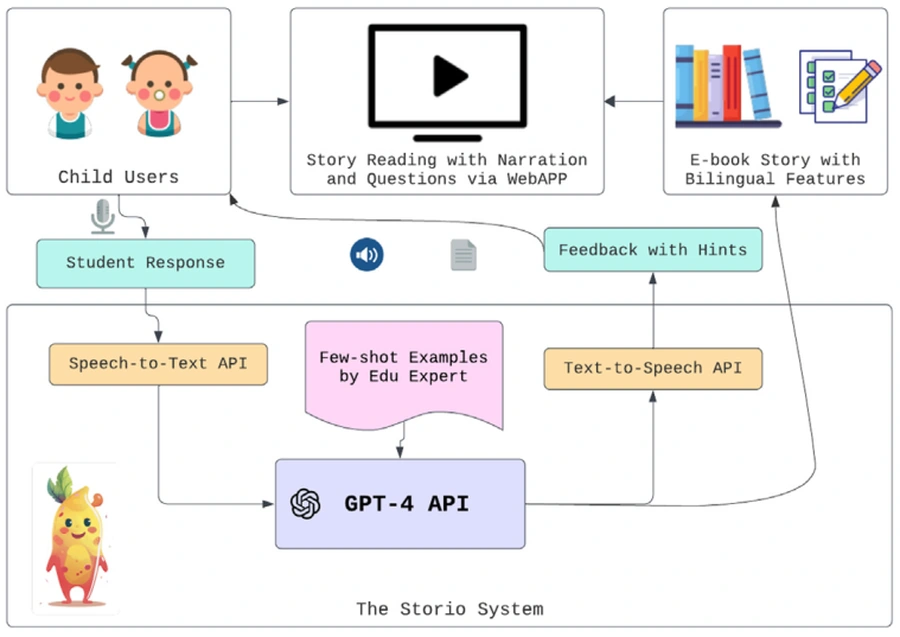
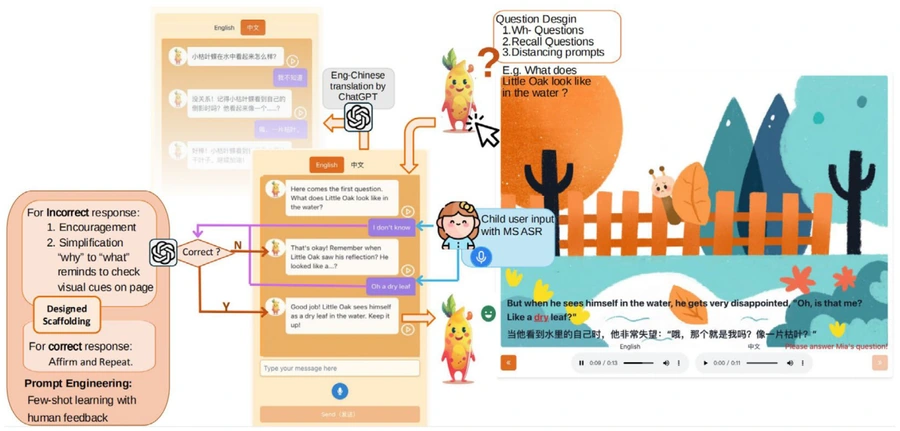
Storio pairs an interactive e-book with Mia, a bilingual conversational reading partner. A design-probe study with 17 children, plus parents and educators, examines adaptive feedback and identifies design considerations for children learning English as a foreign language.
A randomized trial with 67 children compares AI-guided and parent-led e-book reading. Children in the AI-guided group showed stronger reading comprehension, while vocabulary and story-retelling benefits were comparable; the study also examines differences in engagement.
Feiwen Xiao, Ellen Wenting Zou, Jiaju Lin, Zhaohui Li, and Dandan Yang
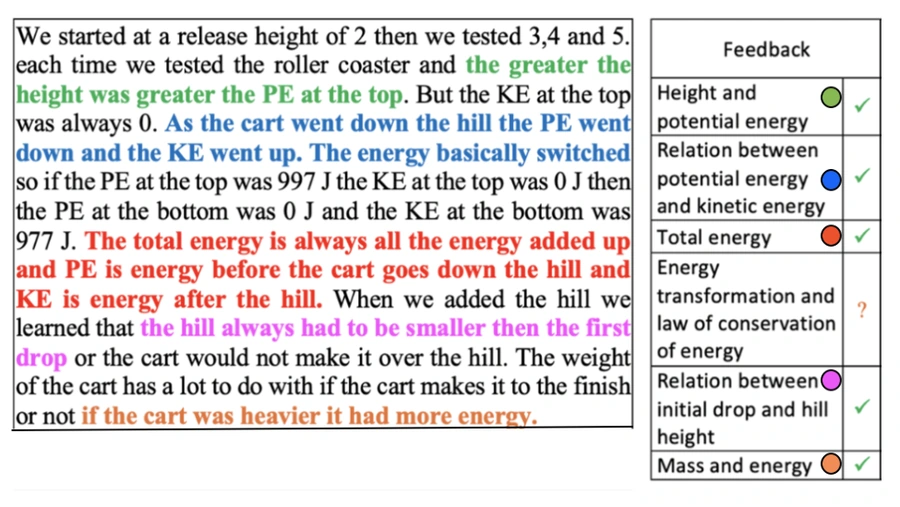
This study tests how the number and quality of prompt examples affect LLM assessment of science essays. Three-example GPT-4o prompts outperformed customized baseline tools for identifying rubric-based main ideas, underscoring the importance of demonstration design.
Mahsa Sheikhi Karizaki, Zhaohui Li, and Rebecca J. Passonneau
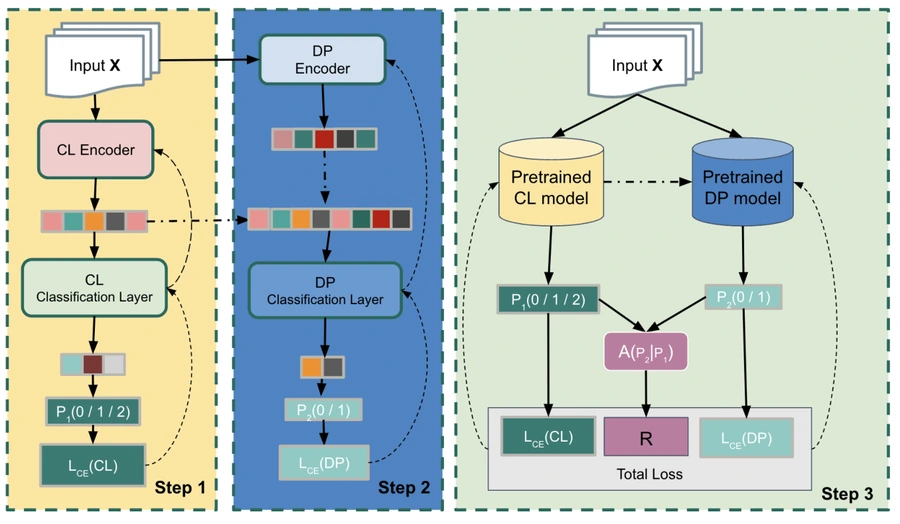
Jointly trains an answer classifier and a policy for deciding when to defer to a human. Experiments on four short-answer classification tasks show that joint training improves selective prediction and the performance of both components.
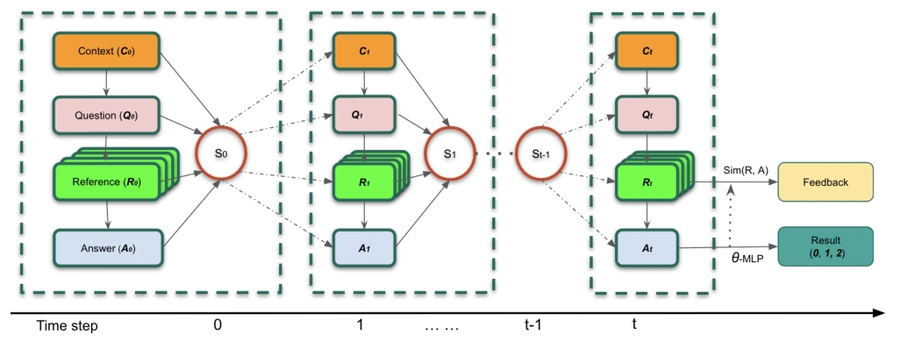
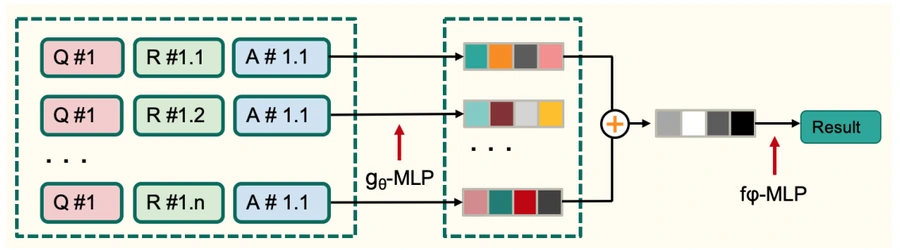
AsRRN models relationships among question contexts, prompts, reference answers, and student responses. Developed with 6,532 statistics responses, it combines recurrent message passing and contrastive learning to assess answers and group them for feedback.
Zhaohui Li, Susan Lloyd, Matthew Beckman, and Rebecca Passonneau
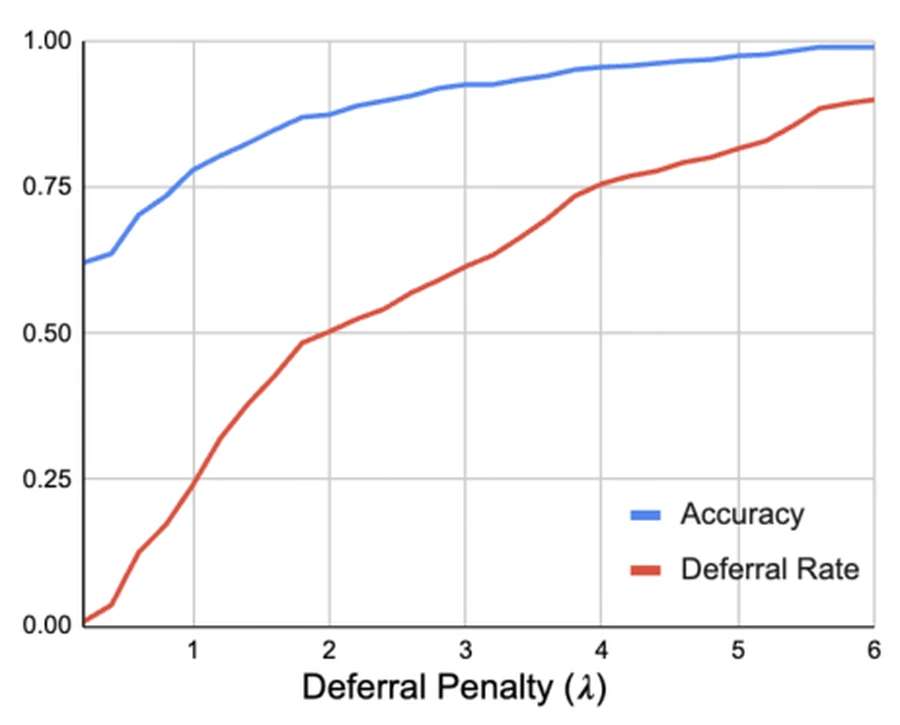
Learns when an automatic short-answer grader should defer to a human using a logistic-regression policy. The study examines how deferral choices balance assessment accuracy with the amount of human grading required.
Zhaohui Li, Chengning Zhang, Yumi Jin, Xuesong Cang, Sadhana Puntambekar, and Rebecca J. Passonneau
Compares classroom grades with reliable post-hoc assessments of college physics lab reports. The findings motivate paired rubrics: one to communicate expectations to students and a finer-grained version to make grading more consistent.
Rebecca J. Passonneau, Kathleen Koenig, Zhaohui Li, and Josephine Soddano
Studies AI-assisted feedback for six short-answer statistics tasks completed by 1,935 students. Human-rating reliability and exploratory response clustering provide a foundation for formative assessment in large-enrollment classes.
Susan E. Lloyd, Matthew D. Beckman, Dennis K. Pearl, Rebecca J. Passonneau, Zhaohui Li, and Zekun Wang
SFRN learns relationships among a question, reference answers, and a student's answer for automatic short-answer grading. Semantic feature-wise transformations combine those relations, while translation-based data augmentation addresses limited and imbalanced training data.
Zhaohui Li, Yajur Tomar, and Rebecca J. Passonneau
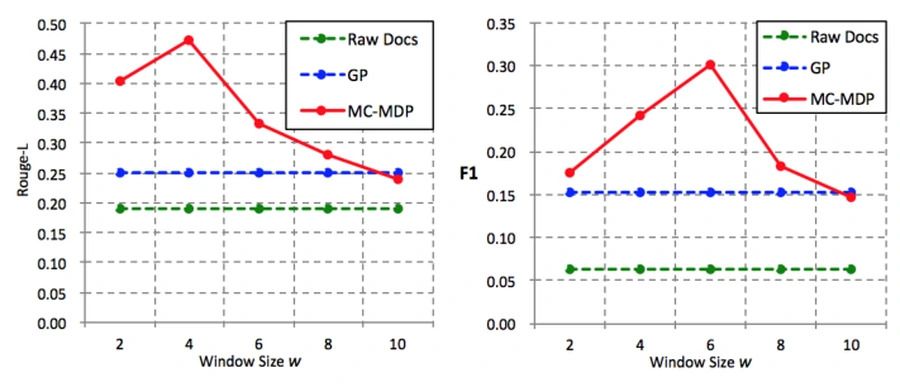
MC-MDP uses reinforcement learning to select question-relevant sentences before extracting an answer. Experiments on MS MARCO show how selecting main content improves downstream reading-comprehension models.
Zhaohui Li, Yue Feng, Jun Xu, Jiafeng Guo, Yanyan Lan, and Xueqi Cheng
A hierarchical reading-comprehension pipeline first selects passages, then question-relevant sentences, and finally an answer span. The method combines attention-based encoding with a Markov decision process and is evaluated on DuReader search data.
Zhaohui Li, Jun Xu, Yanyan Lan, Jiafeng Guo, Yue Feng, and Xueqi Cheng
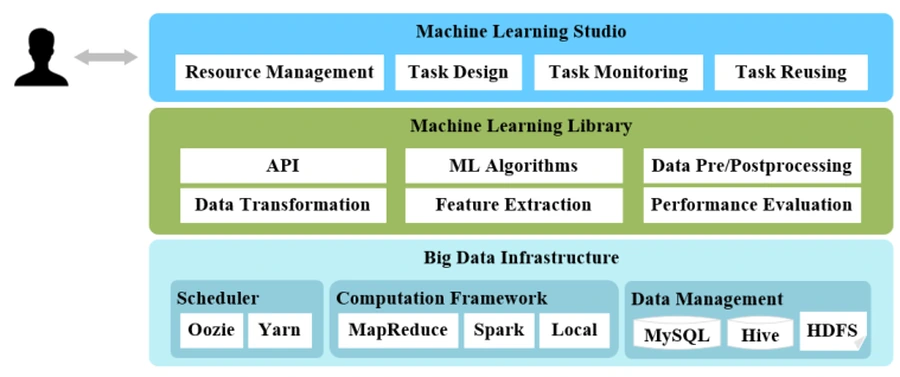
A visual dataflow system lets users build, run, monitor, and reuse machine-learning workflows as directed acyclic graphs. It connects a drag-and-drop studio with algorithm libraries and Hadoop/Spark infrastructure, including both standalone and distributed operations.
Tianyou Guo, Jun Xu, Xiaohui Yan, Jianpeng Hou, Ping Li, Zhaohui Li, Jiafeng Guo, and Xueqi Cheng
A semi-supervised language model incorporates sentiment labels into word-vector learning. Evaluated on English and Chinese product reviews, the approach studies how semantic and sentiment information can jointly support review classification.
Yuan Wang, Zhaohui Li, Jie Liu, Zhicheng He, Yalou Huang, and Dong Li
I plan to develop a theoretical framework for translating educational goals into computational tasks, informed by interdisciplinary collaboration, and an agent-based system to support task formulation and evaluation design. I also plan to investigate responsible AI use in education, including potential risks of emotional overreliance and declines in students’ independent reasoning.
Datasets & software
I-STUDIO — Short student answers to statistics questions, with assessment labels (2023).