Research projects

My research connects pedagogical alignment, human–AI collaboration, and personalized learning. Related papers, datasets, and systems are grouped around a shared research question.

Selected research experience

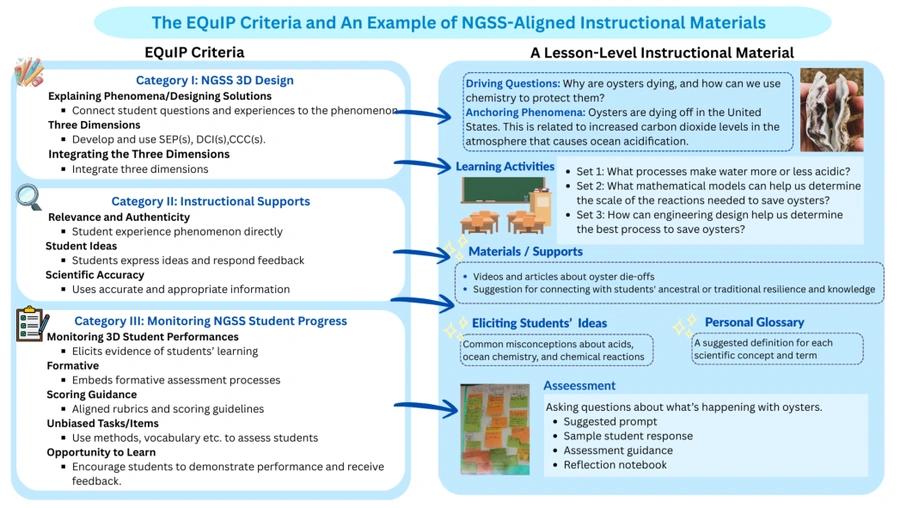
  1. Diagram linking the EQuIP rubric's three categories to corresponding elements of a science lesson, including learning activities, instructional support, and assessment.
    Figure 1 · Connecting lesson content with evaluation criteria

    Ongoing project · July 2025–present

    01. SciEval: evaluating K–12 science instructional materials

    Role
    Research lead
    Collaborators
    Tingting Li (Washington State University); Peng He (Washington State University)

    I lead task formulation, rubric co-design, and model fine-tuning for evaluating science instructional materials. SciEval provides a rubric-based benchmark with scores and evidence; Judging the Judges uses expert review to examine where model scores, explanations, and suggestions depart from instructional context.

    • In development: A classroom platform to help teachers understand, evaluate, and adapt STEM instructional materials.
    • Proposal in preparation: NSF STEM K–12.

    Also connects with: Human-AI collaboration
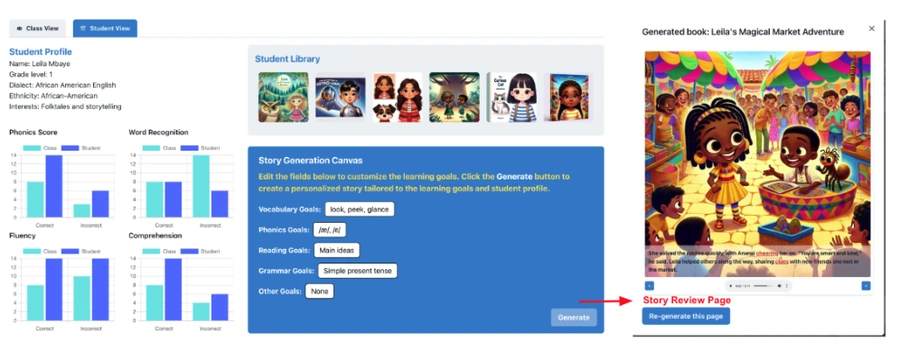
  2. StoryLab teacher dashboard with a student profile, reading-skill charts, story library, generation controls, and a generated story review panel.
    Figure 2 · Related StoryLab work: teacher-guided story generation and review

    Ongoing project · July 2024–present

    02. AIRE: decodable story generation and evaluation

    Role
    Research lead
    Collaborators
    Tanya Christ (CELaRAI co-PI); John Strong (CELaRAI co-PI); Laura Tortorelli (CELaRAI co-PI)

    I lead AIRE development and co-design rubrics for phonics alignment, narrative coherence, and illustration quality with literacy experts. AIRE generates personalized decodable texts aligned with taught phonics patterns. Related work in StoryLab combines teacher-defined learning goals with children's interests to generate stories, illustrations, and vocabulary support, with teachers selecting and revising materials.

    • Center funding: IES R305C240046 · $10 million total CELaRAI award · September 2024–August 2029.

    Also connects with: Pedagogical alignmentHuman-AI collaboration

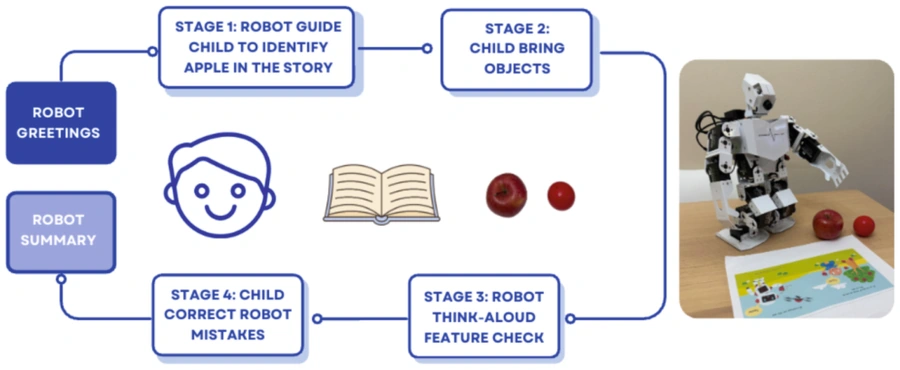
  3. Four-stage robot-assisted reading workflow, from identifying an apple in a story to checking real objects and correcting the robot, alongside the humanoid robot.
    Figure 1 · The robot-assisted reading workflow

    Ongoing project · Nov 2024–present

    03. Embodied AI: reading companions for children's AI literacy

    Role
    Research lead
    Collaborator
    Shiyan Jiang (University of Pennsylvania)

    I implement pedagogically structured dialogue for an LLM-powered reading robot. The feasibility study evaluates dialogue policies with simulated child profiles and an expert; it informs future studies of physical presence, turn-taking, and participation by children and adults. Related Storio studies examine bilingual conversational support in children's e-book reading: a design study with children, parents, and educators, and a separate randomized study comparing AI-guided and parent-led reading across comprehension, vocabulary, retelling, and engagement.

    Also connects with: Personalized learning

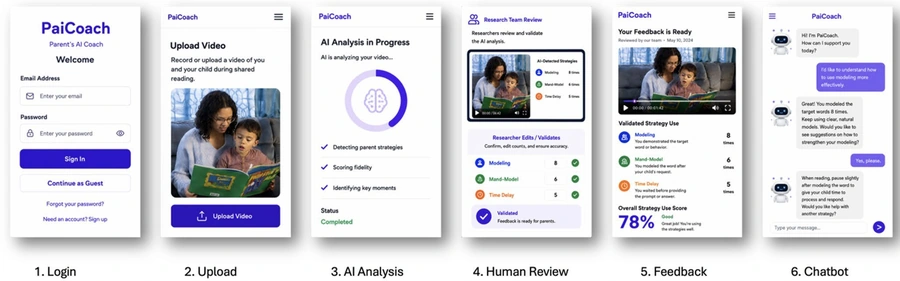
  4. PaiCoach interaction workflow from login and video upload through AI analysis, human review, parent feedback, and chatbot support.
    Figure 1 · PaiCoach system workflow

    Ongoing project · Nov 2024–present

    04. PaiCoach: AI assessment and coaching for autism home interventions

    Role
    Research lead

    I lead ASD-HI benchmark and PaiCoach model development to assess parent–child home interventions and generate feedback for specialist review. ASD-HI benchmarks communication-strategy detection and assessment. A four-family PaiCoach study found preliminary improvements under an AI-assisted workflow in which specialists corrected strategy codes and reviewed every feedback message before delivery.

    Also connects with: Pedagogical alignmentHuman-AI collaboration

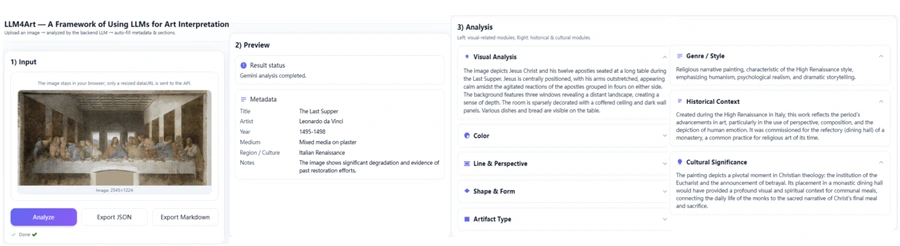
  5. LLM4Art application showing an uploaded painting, artwork metadata, and interpretation panels for visual analysis, historical context, and cultural significance.
    Figure 1 · The LLM4Art interpretation workspace

    Ongoing project · July 2025–present

    05. LLM4Art: expert-guided art interpretation and evaluation

    Role
    Research lead
    Collaborator
    Kyunghee Pyun (Fashion Institute of Technology)

    I lead application and evaluation development, translating art scholars' expertise into prompts and rubrics for visual analysis, historical context, and cultural significance. A benchmark and prototype application support comparison of model interpretations, with ongoing work on art-focused datasets, model adaptation, and educational uses.

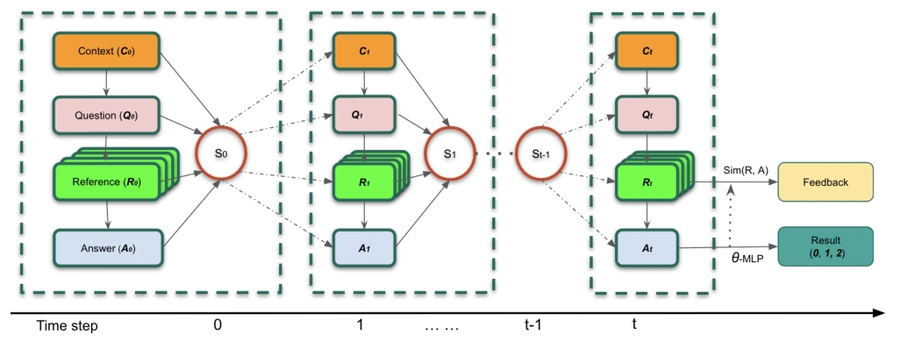
  6. AsRRN diagram showing context, question, reference, and answer nodes passing messages over time to produce an assessment and feedback.
    Figure 2 · AsRRN models the assessment context

    Doctoral research · Aug 2019–May 2024

    06. Automated formative assessment of STEM short responses

    Role
    Research lead
    Mentor
    Rebecca J. Passonneau (The Pennsylvania State University)
    Collaborators
    Matthew D. Beckman (The Pennsylvania State University); Sadhana Puntambekar (University of Wisconsin–Madison)

    I developed SFRN and AsRRN to represent relationships among questions, reference responses, and student answers for automated assessment, and investigated demonstration examples for LLM assessment of science essays. Related work studies how assessed responses can be grouped to support formative feedback.

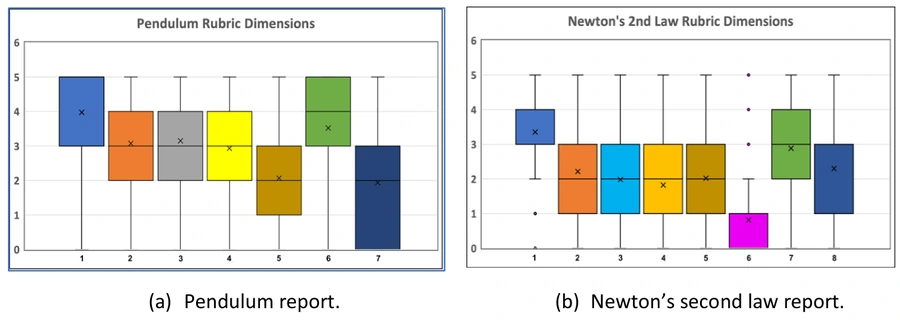
  7. Box plots of student performance across seven pendulum-report rubric dimensions and eight Newton's second-law report dimensions.
    Figure 6 · Performance across lab-report rubric dimensions

    Doctoral research · Aug 2019–May 2024

    07. STEM assessment datasets and human scoring rubrics

    Role
    Research lead
    Mentor
    Rebecca J. Passonneau (The Pennsylvania State University)
    Collaborator
    Matthew D. Beckman (The Pennsylvania State University)

    I contributed to the I-STUDIO and physics lab-report datasets, including rubric development and human-scoring procedures for automated assessment. Related research compares routine physics classroom grades with trained raters' judgments, showing why target labels need scrutiny and how detailed rubrics make expectations and evidence explicit before those judgments become targets for machine learning.

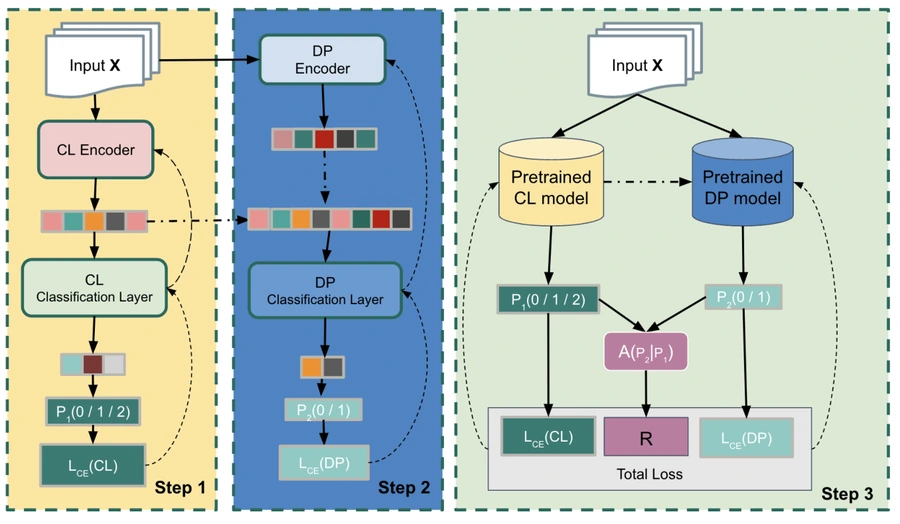
  8. Three-stage architecture: warm up the classifier, warm up the deferral policy, then jointly train both using a shared reward signal.
    Figure 1 · Joint training of assessment and deferral

    Doctoral research · Aug 2019–May 2024

    08. Human–AI collaboration: selective prediction and human deferral

    Role
    Research lead
    Mentor
    Rebecca J. Passonneau (The Pennsylvania State University)
    Collaborator
    Sadhana Puntambekar (University of Wisconsin–Madison)

    I developed methods for automated assessment models to answer or defer to a person, including joint optimization of assessment and deferral representations. The initial work evaluates a learned deferral policy in a held-out simulation using human reference labels. Subsequent work jointly trains assessment and deferral representations across four student-answer datasets.

    Also connects with: Pedagogical alignment

Browse by research area

Additional & earlier work

Pipeline from question, titles, and passages through passage selection, main-content selection, and answer extraction to the final answer.
Figure 1 · From passage selection to answer extraction

Earlier work · 2018-2019

Machine reading comprehension

This work develops hierarchical methods for answering questions across multiple passages. Passage selection, question-relevant sentence selection, and answer extraction break the task into stages. Reinforcement learning for main-content selection examines how choosing useful evidence can improve downstream reading-comprehension models on benchmark datasets.

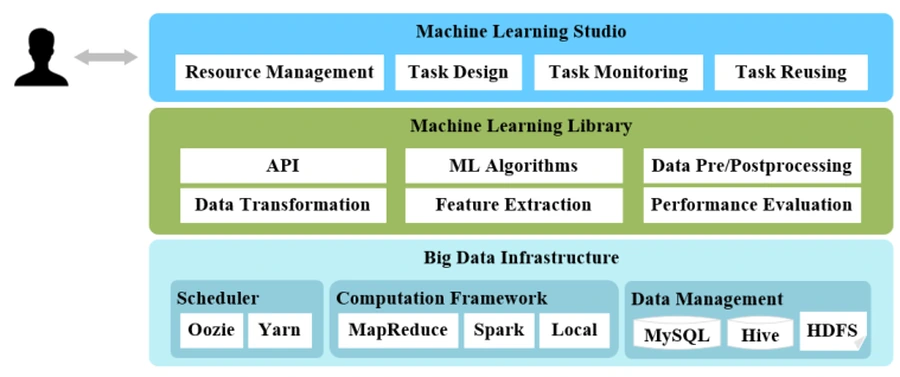
System architecture with a machine-learning studio above the algorithm library and big-data infrastructure for scheduling, computation, and data management.
Figure 2 · The dataflow system architecture

Earlier work · 2016

Dataflow tools for machine learning

A visual dataflow system makes machine-learning workflows easier to construct, execute, monitor, and reuse. Users connect operations as a directed acyclic graph in a drag-and-drop studio. The system integrates algorithm libraries with Hadoop and Spark infrastructure to support both standalone and distributed computation.

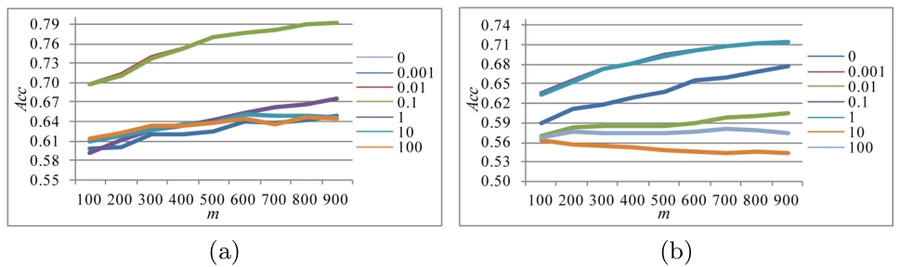
Classification-accuracy curves for English and Chinese reviews across word-vector dimensions and sentiment-weight settings.
Figure 2 · Review classification with sentiment-aware vectors

Earlier work · 2014

Sentiment-aware word representations

This early NLP work incorporates sentiment labels into a semi-supervised language model for learning word vectors. Experiments on English and Chinese product reviews examine how semantic and sentiment information work together, studying representation choices that support review classification across the two languages.